the platform behind the operating system for distributed care

The platform behind the operating system for distributed care. Oben provides the mobile, clinician and payer tools that power workflow at scale.

The Community Health Worker App

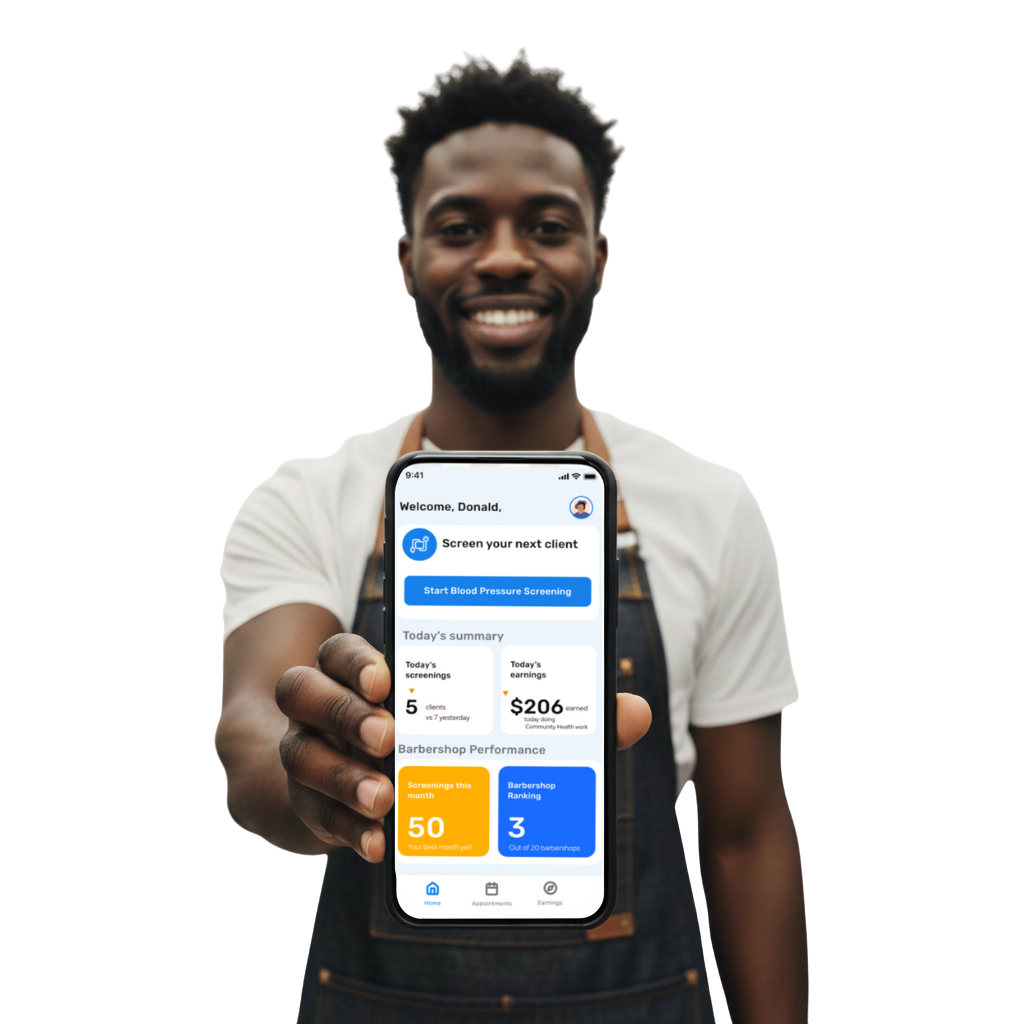
Certified barbers, stylists, and other community members as community health workers (CHWs) are able to screen, enroll and refer patients within minutes.

The app serves as an agent to walk the CHWs through clinical workflows with confidence and ease - so that our community partners can focus on the health and wellbeing of their clients.

Clinical workflows intersect with salon operations - allowing the stylist to access health coaching guidance, appointments, screening trackers, and payment information all in one place.

Our app makes screening for hypertension as seamless as giving clients their best cut.

Core Functions

  • Integrated Booking & Workflow: Seamlessly combines appointment management with clinical screening steps.

  • Guided Clinical Readings: Walks the barber/CHW through standardized procedures for collecting vital readings (e.g., blood pressure) and health assessments.

  • Client Engagement & Education: Delivers immediate, simple, and culturally relevant feedback and educational materials to the client based on their readings.

  • Performance Tracking: Allows the barber to track key metrics, including the number of screenings performed and the incentive payments/revenue earned.

The Clinician Console

Overview of the Use Case

The Clinician Console is the central dashboard for licensed healthcare providers (e.g., nurses, pharmacists, physicians) who manage the care plans for clients screened in the barbershops. It uses data collected via the Barber App to apply intelligent risk stratification, ensuring clinicians focus their limited time and resources on the patients who need immediate attention.

Why It's Important / Better Than What's Out There

This is a superior model for chronic disease management because it offers Intelligent Triage and Holistic, High-Frequency Feedback. Instead of a general patient queue or episodic data from biannual doctor visits, the system uses clinical rules (e.g., "Hypertensive patients are top of the list vs. elevated blood pressure") to prioritize high-risk individuals. Furthermore, the partnership with the barber allows the clinician to receive regular progress feedback between formal appointments, dramatically improving the ability to build and adjust an effective, holistic care plan that works within the patient’s real life.

Core Functions

  • Risk-Based Triage Dashboard: Automatically prioritizes patient outreach and follow-up based on the severity and recency of their health readings.

  • Digital Care Plan Management: Enables clinicians to create, assign, and track personalized care plans, medication adherence, and lifestyle goals.

  • Barber/CHW Communication: Facilitates secure, asynchronous communication between the clinician and the barber for check-ins and updates on the patient’s progress.

  • Referral and Resource Coordination: Manages seamless referrals to specialists, social services, and community resources to address Social Determinants of Health (SDOH).

The Payer Dashboard - Value Based Population Health and Reimbursement

Overview of the Use Case

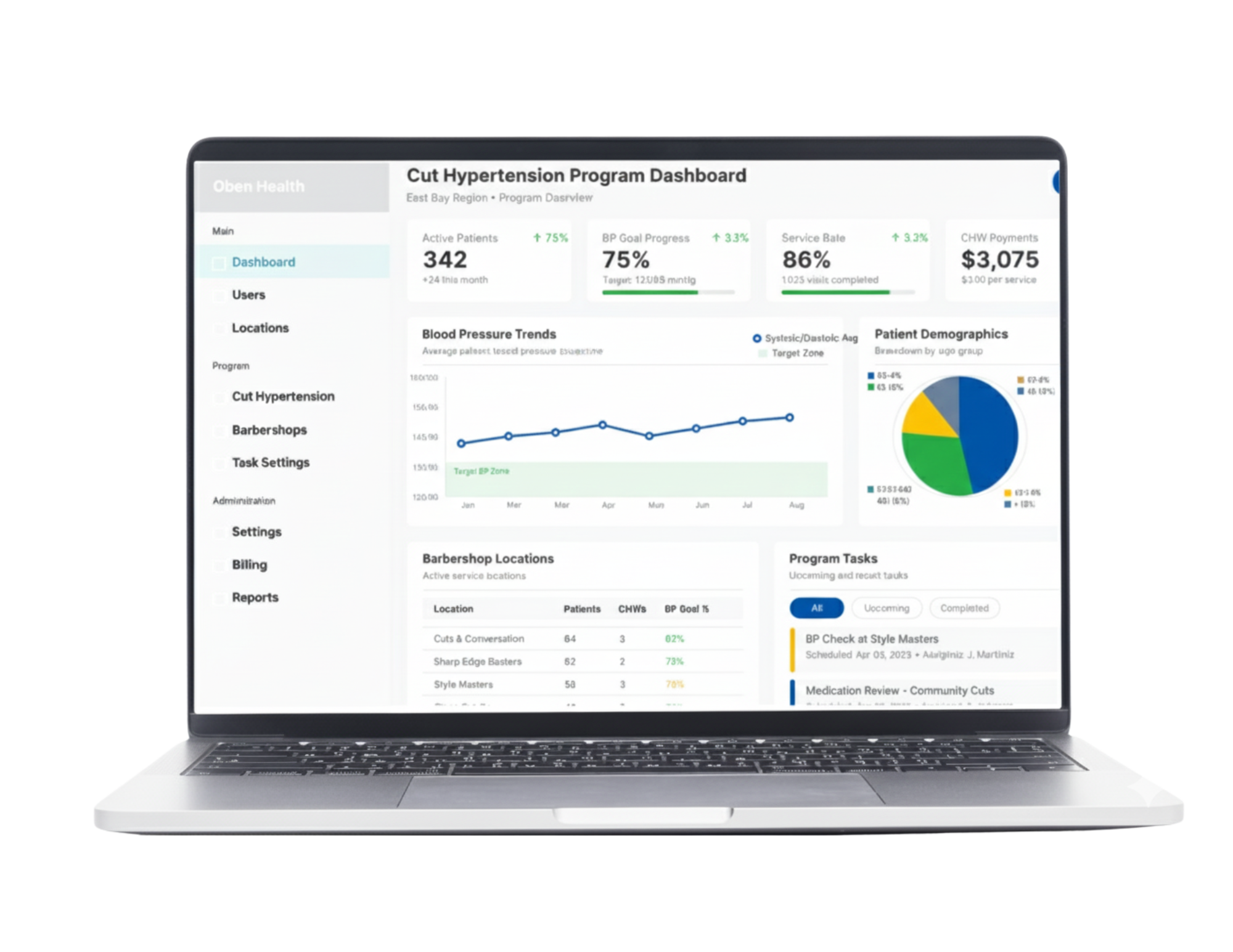
The Payer Dashboard provides health insurance companies, Medicare/Medicaid plans, and other payers with the necessary data and visibility to manage the unique population engaged through the Oben Health model. It focuses on demonstrating the value of this community-based intervention for population health management and ensuring smooth financial processes.

Why It's Important / Better Than What's Out There

This platform component is crucial for achieving Value-Based Care by unlocking hard-to-reach populations and proving outcomes. Payers traditionally struggle with engaging minority and underserved populations for preventative care, which leads to high-cost emergency room visits and hospitalizations later. The Oben Health Platform provides a solution for this by enabling engagement with populations they otherwise would not reach, and it standardizes the data needed to track quality metrics and support successful reimbursement for preventative services.

Core Functions

  • Population Engagement Analytics: Visualizes the reach, frequency, and impact of screenings within specific demographics and communities.

  • Quality Measure Tracking (HEDIS/Star Ratings): Aggregates data on preventative screening rates and chronic condition management to support key quality metrics.

  • Claims Submission Support: Tracks the necessary clinical information and documentation from both the barber (screening) and the clinician (treatment) to ensure accurate and timely reimbursement for covered services.

  • Cost Savings and Outcome Reporting: Provides dashboards to demonstrate the return on investment by showing the correlation between increased preventative engagement and reduced high-cost utilization (e.g., emergency visits).